
Tropical Entomology - Avocado Lacebug
Pseudacysta perseae (Hiedemann) (Heteroptera: Tingidae)
-
Description
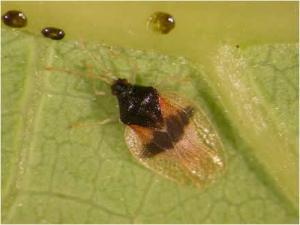
The avocado lace bug, Pseudacysta perseae, was considered a minor pest of avocadoes until severe outbreaks were observed during the 90s. The adults are oblong shaped, brownish with numerous small "lace like cells" in the thorax and wings; they are observed on the leaf underside, where they feed, extracting juices from the plant. They usually live in colonies, depositing eggs in irregular rows in clusters on the lower leaf surface. The eggs are covered with a dark, sticky secretion from the adults. Upon emergence the first instar nymphs start to feed by sucking the juices of leaf cells in the vicinity of the oviposition site. The avocado lace bug goes through 4 nymphal stages, that show difference in the shape.
-
Damage
Part of plant damaged: Leaves

Avocado lace bug feeds extracting juices from the leaves and cause a gradual localized destruction of the plant cells. The resulting chlorotic areas will become brown and necrotic, and they are an indication of the presence of the lace bugs. Injuries from lace bug activities provided the infection court for the anthracnose fungus, Colletotrichum gloeosporioides, the cause of the large necrotic blotches on the leaves, that first catches ones attention when surveying avocado and other hosts.
-
Life Cycle
The life cycle of the avocado lace bug was reported by Abud Antum (1991) to be 22 days from egg to adult stage. Lace bugs begin a steady build-up in January and March.
-
Management
Action Levels
Presence of the avocado lace bug and damage of more than 30% to the foliage would merit application of pesticides. The pesticides, M-pede (soap) provided control of the avocado lace bug.
Biological Control
The most important natural enemies of the lace bug are two egg parasitoids, the green lacewing, and a predacious mirid.
Chemical Control
Fact Sheets
- Peña, J. E., Duncan, R. E., Roltsch, W. J., Carrillo, D. 2012. Mortality factors of the avocado lace bug, Pseudacysta perseae (Heteroptera: Tingidae), in Florida. Florida Entomol. 95(1): 179-182.
- Henry, T. J., Peña, J. E., Long, D., Acevedo, F. 2009. Stethoconus praefectus (Hemiptera: Miridae): First North American record of an old world plant bug predacious on avocado lace bug, Pseudacysta perseae (Hemiptera: Tingidae), in Florida. Proc. Entomol. Soc. Wash. 111(1): 98-105.
- Holguin, C. M., Peña, J. E., Henry, T. J., Acevedo, F. 2009. Biology of Stethoconus praefectus (Distant) (Heteroptera: Miridae), a newly established predator of the avocado lace bug, Pseudacysta perseae (Heteroptera: Tingidae), in Florida. Florida Entomol. 92(1): 54-57
- Peña, J. E., Triapitsyn, S. V., Long, D., Evans, G. A., Roltsch, W. 2009. First record of Erythmelus klopomor (Hymenoptera: Mymaridae) as a parasitoid of the avocado lace bug Pseudacysta perseae(Heteroptera: Tingidae). Florida Entomol. 92(2): 394-395.
- Gagné, R. J., Peña, J. E., Acevedo, F. E. 2008. A new Lestodiplosine (Diptera: Cecidomyiidae) preying on the avocado lace bug, Pseudacysta perseae (Heteroptera: Tingidae) in southern Florida. Florida Entomol. 91(1): 43-48.
- Peña, J. E., Duncan, R., Roltsch, W., Gagné, R., Agudelo, F. 2007. Natural enemies of the avocado lace bug, Pseudacysta perseae (Heteroptera: Tingidae) in Florida, USA. Proceedings VI World Avocado Congress. Viña Del Mar, Chile. 12-16 Nov.
- Peña, J. E., Sundhari, S., Hunsberger, A., Duncan, R., Schaffer, B. 1998. Monitoring, damage, natural enemies and control of avocado lace bug, Pseudacysta perseae (Hemiptera: Tingidae). Proc. Fla. State Hort. Soc. 111: 330-334.
-
Images
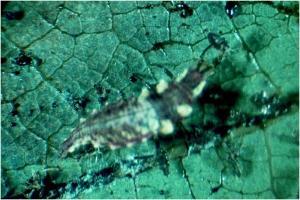
Chrysoperla rufilabris, a predator of avocado lace bug
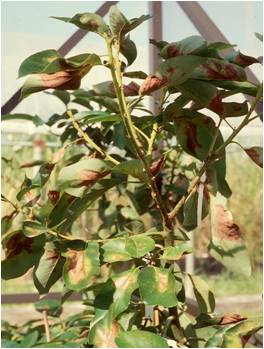
Avocado tree with 40 to 60% damage by avocado lace bug

Erythmelus egg parasitoid of avocado lace bug
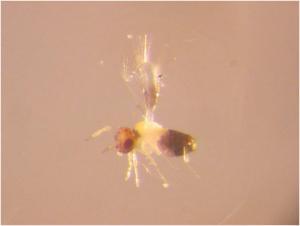
Trichogrammatid egg parasitoid of avocado lace bug
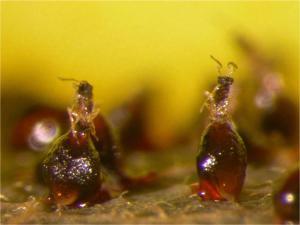
Adult parasitoids emerging from avocado lace bug eggs
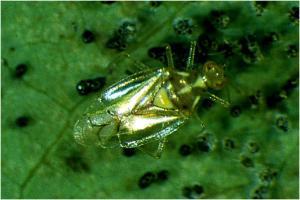
Paracarniella cubanus, a natural enemy of avocado lace bug
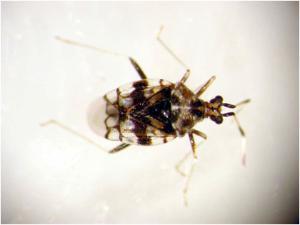
New predator of avocado lace bug
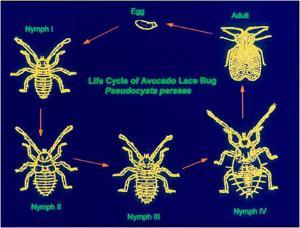
Life cycle of avocado lace bug